Skip to content

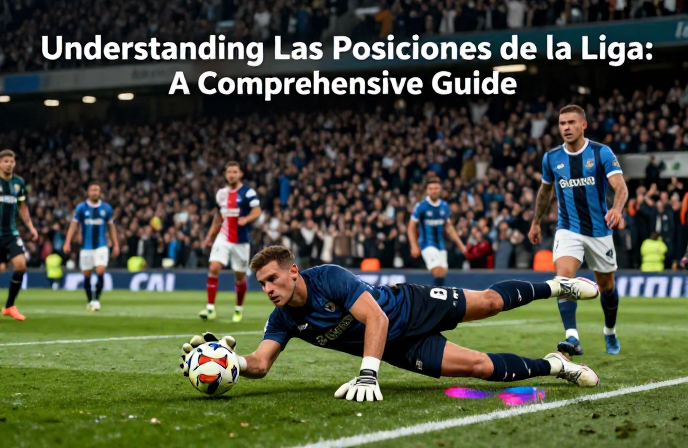
Understanding Las Posiciones de la Liga: A Comprehensive Guide to las posiciones de la liga
La Liga, Spain’s top professional football division, is a captivating competition followed by millions around the globe. Understanding las posiciones de la liga is crucial for any fan wanting to truly appreciate the drama and strategy unfolding on the pitch. This guide will break down exactly how the league table works, the factors that influence a team’s position, and what those positions ultimately mean.
How La Liga Points are Awarded
The foundation of las posiciones de la liga is the points system. Like most football leagues, La Liga awards points based on match results:
- Win: 3 points
- Draw: 1 point
- Loss: 0 points
Teams accumulate these points throughout the season, and their total determines their ranking in las posiciones de la liga.
Tiebreakers in La Liga
What happens when two or more teams have the same number of points? La Liga employs a series of tiebreakers to determine las posiciones de la liga in these situations. The primary tiebreaker is the head-to-head record between the tied teams. This means that if two teams are level on points, the team with the better record in their matches against each other will be ranked higher.
If the head-to-head record is also tied (e.g., each team won one match), then the next tiebreaker is goal difference across all league matches. Goal difference is calculated by subtracting the number of goals a team has conceded from the number of goals they have scored. A higher goal difference results in a higher position in the table.
If goal difference is also identical, the next tiebreaker is total goals scored. The team that has scored more goals throughout the season will be ranked higher.
In the rare event that all the above tiebreakers are equal, fair play conduct might be considered or, ultimately, a play-off match might be arranged, though this is exceptionally rare. These tiebreakers ensure that las posiciones de la liga accurately reflect a team’s overall performance and head-to-head results.
The Importance of Goal Difference
As mentioned above, goal difference plays a significant role in determining las posiciones de la liga, especially when teams are tied on points. A strong goal difference indicates a team’s ability to both score goals and defend well. Teams with a positive goal difference are generally more successful than those with a negative goal difference. Therefore, teams often focus on improving their goal difference, particularly in closely contested matches.
What the Top Positions Mean
Securing a high position in las posiciones de la liga is the ultimate goal for every team. The top four teams at the end of the season automatically qualify for the prestigious UEFA Champions League, offering significant financial rewards and the chance to compete against Europe’s best clubs. These spots are highly coveted, leading to intense competition throughout the season.
The teams finishing in fifth and sixth place typically qualify for the UEFA Europa League, another important European competition. While not as prestigious as the Champions League, the Europa League still provides valuable experience and financial benefits. The fight for these Europa League spots is often fierce, with several teams vying for qualification.
Relegation Battle: The Bottom Positions
At the other end of las posiciones de la liga, the bottom three teams face the dreaded prospect of relegation to the Segunda División (second division). Relegation can have severe financial consequences for a club, impacting their ability to attract players and compete effectively. The relegation battle is often just as dramatic as the fight for the top spots, with teams desperately trying to avoid the drop. The pressure on players and managers in these situations can be immense.
Factors Influencing a Team’s Position
Numerous factors can influence a team’s posiciones de la liga. These include:
- Player Quality: Having talented and skilled players is essential for success.
- Team Chemistry: A cohesive and well-integrated team is more likely to perform well.
- Managerial Expertise: A capable manager can develop effective strategies and motivate players.
- Injuries and Suspensions: Key injuries and suspensions can significantly impact a team’s performance.
- Home Advantage: Playing at home often provides a psychological advantage due to the support of the fans.
- Financial Resources: Clubs with greater financial resources can attract better players and invest in facilities.
- Tactical Flexibility: The ability to adapt tactics to different opponents is crucial.
- Luck: Sometimes, luck can play a role in determining match outcomes.
All these elements combine to influence how a team performs and, ultimately, where they stand in las posiciones de la liga.
The Season’s Progression and Changing Positions
Las posiciones de la liga are not static; they change constantly throughout the season as teams play matches and accumulate points. Early season form can be misleading, as teams often need time to gel and find their rhythm. As the season progresses, the table begins to take shape, and the true contenders for the top spots and the relegation candidates become clearer.
Mid-season form is particularly important, as teams look to build momentum and consolidate their position. The January transfer window can also have a significant impact, as teams can strengthen their squads with new signings. Keep an eye on epl transfer deadline to see which players might move to La Liga and influence their new team’s performances.
The final stretch of the season is often the most intense, with teams fighting for every point. The pressure is immense, and even small mistakes can prove costly. The final posiciones de la liga are often not decided until the very last day of the season, adding to the excitement and drama.
Analyzing Historical Data
Analyzing historical data from previous La Liga seasons can provide valuable insights into trends and patterns. For example, it can reveal which teams consistently perform well, which teams tend to struggle, and how the average number of points required to qualify for the Champions League or avoid relegation has changed over time. This data can be useful for predicting future outcomes and understanding the dynamics of the league.
The Impact of New Signings
New player signings can have a significant impact on a team’s performance and, consequently, their posiciones de la liga. A high-profile signing can boost morale, improve the team’s quality, and attract more fans. However, it’s important to remember that new players need time to adapt to their new surroundings and integrate into the team. A poorly integrated signing can actually have a negative impact on team chemistry and performance. Therefore, clubs need to carefully consider their transfer targets and ensure that they are a good fit for the team.
The Role of the Manager
The manager plays a crucial role in shaping a team’s performance and determining their posiciones de la liga. A good manager can develop effective strategies, motivate players, and create a winning culture. They are also responsible for making tactical decisions during matches, managing the squad, and handling the pressure from fans and the media. A change of manager can sometimes lead to a significant improvement in a team’s form, but it can also backfire if the new manager is not a good fit.
The Future of La Liga
La Liga continues to evolve and adapt to the changing landscape of football. New technologies, such as video assistant referee (VAR), are being implemented to improve the accuracy of officiating. The league is also working to attract new fans and increase its global appeal. The future of las posiciones de la liga will likely be shaped by these developments, as well as by the ongoing competition between clubs to attract the best players and managers.
Ultimately, understanding las posiciones de la liga requires a deep appreciation of the many factors that influence a team’s performance, from player quality to managerial expertise to sheer luck. By following the league closely and analyzing the data, fans can gain a greater understanding of the beautiful game and the drama that unfolds on the pitch.
FAQ
What happens if two teams are tied on points at the end of the La Liga season?
The first tiebreaker is the head-to-head record between the two teams. If that’s also tied, then goal difference across the entire season is used, followed by total goals scored.
How do teams qualify for the Champions League from La Liga?
The top four teams in las posiciones de la liga at the end of the season automatically qualify for the UEFA Champions League group stage.
What happens to the teams that finish in the bottom three positions in La Liga?
The bottom three teams in las posiciones de la liga are relegated to the Segunda División (second division) for the following season.